
Most technology projects do not collapse because of one dramatic event.
They drift.
A decision remains open longer than expected. A submittal is reviewed without all required information. Equipment arrives later than planned. Responsibilities become unclear. Installation moves forward while design questions are still unresolved. Individually, these issues may appear manageable. Together, they create conditions that can affect schedule, cost, quality, testing, and final acceptance.
Drift Often Starts With Visibility
One of the earliest warning signs is a growing gap between reported progress and actual project condition.
A project may appear active because meetings are occurring, equipment is being ordered, and technicians are working. Activity, however, is not the same as measurable progress.
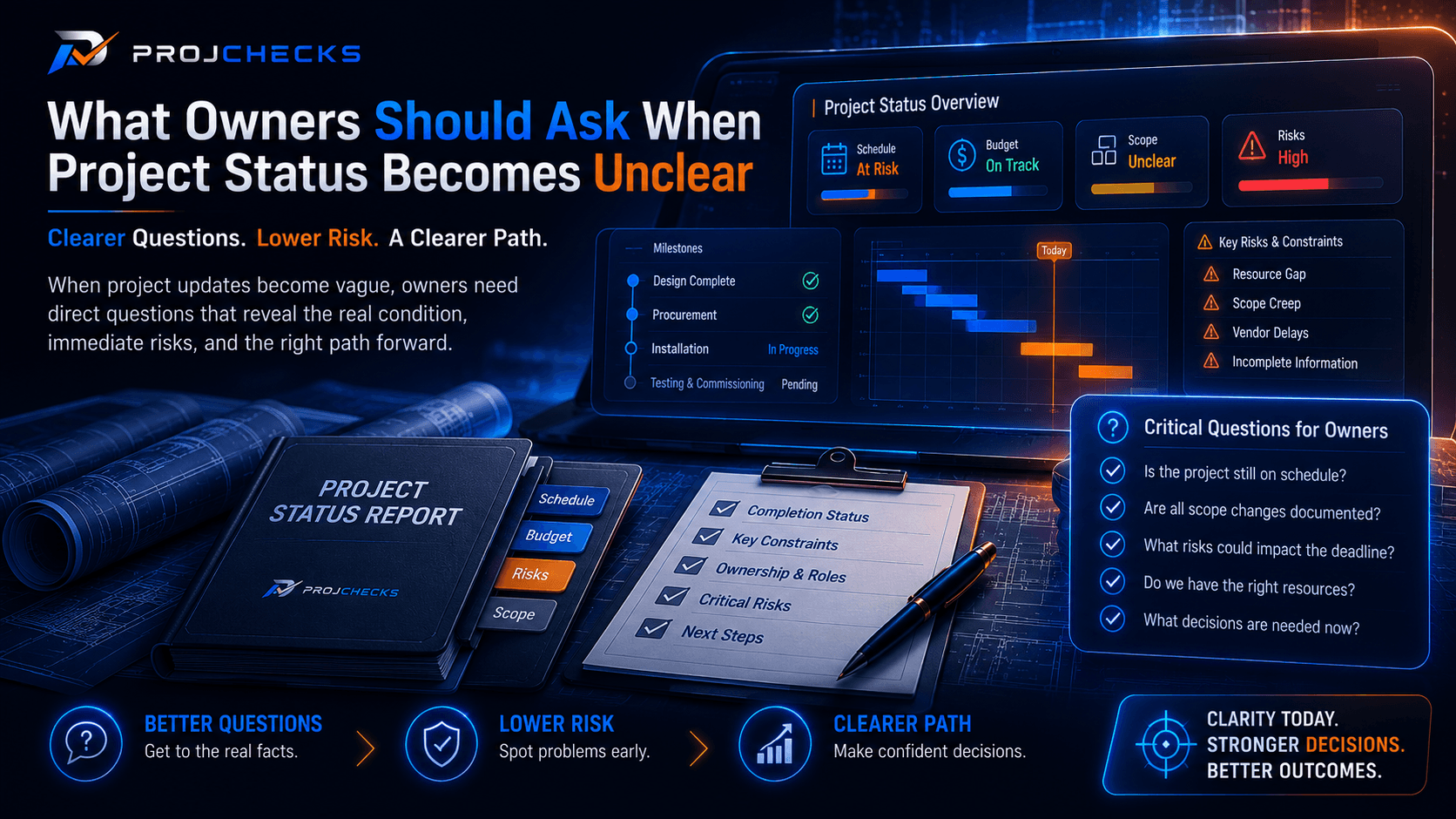
• What has actually been completed
• What remains unresolved
• Which decisions are blocking progress
• Who owns each next step
• Which dates are confirmed and realistic
• What risks may affect the final outcome
Without this information, teams can continue moving while the project quietly loses alignment.
Small Gaps Become Larger Problems
Technology systems are highly coordinated. Displays, networks, control systems, audio processing, software, programming, infrastructure, and user requirements often depend on one another.
A missed detail in one area can create downstream consequences elsewhere. An incomplete infrastructure requirement may affect installation. A delayed owner decision may affect programming. Missing documentation may affect testing, training, and closeout.
The issue is not always that someone made one major mistake. More often, smaller gaps were not identified, documented, assigned, and resolved early enough.
Warning Signs That Deserve Attention
• Status updates rely on percentages without supporting detail.
• Open items are spread across emails, meeting notes, and informal conversations.
• Dates are repeatedly moved without clearly documenting the constraint.
• Installation continues while design or infrastructure questions remain open.
• Testing is discussed generally but is not tied to documented requirements.
• The project team cannot produce one reliable list of remaining actions and owners.
Any one of these conditions may be recoverable. Several occurring together usually indicate that the project needs a clearer operating picture.
Recovery Starts With Clarity
Project recovery does not begin by assigning blame. It begins by establishing a reliable view of the current condition.
That means reviewing available documentation, separating completed work from reported work, confirming open decisions, identifying immediate constraints, and building a practical path forward.
The goal is not to take control away from the project team. The goal is to provide enough independent visibility for better decisions to be made.
Early Intervention Preserves Options
When project drift is identified early, the team still has options. Priorities can be reset. Decisions can be escalated. Sequencing can be corrected. Testing and closeout expectations can be clarified before the remaining time and budget are consumed.
Clear observations, defined ownership, realistic next steps, and consistent follow-through can prevent a difficult project from becoming an expensive failure.
Key Spec Checklist
Pixel Pitch Standard
0.9mm to 1.5mm (Corporate spaces)
Power Configuration
Dedicated 208V 3-Phase Panels
Ventilation Target
At least 2-inch continuous rear air gap
Structure Load Rating
Seismic-certified steel framing
Need technical project validation?
Get an independent review of your technology contracts and specifications before signing.
Related Checkpoint
More professional guidance on enterprise project recovery and execution.



Recover. Realign. Deliver.
Quick Links
© 2026. All right reserved.